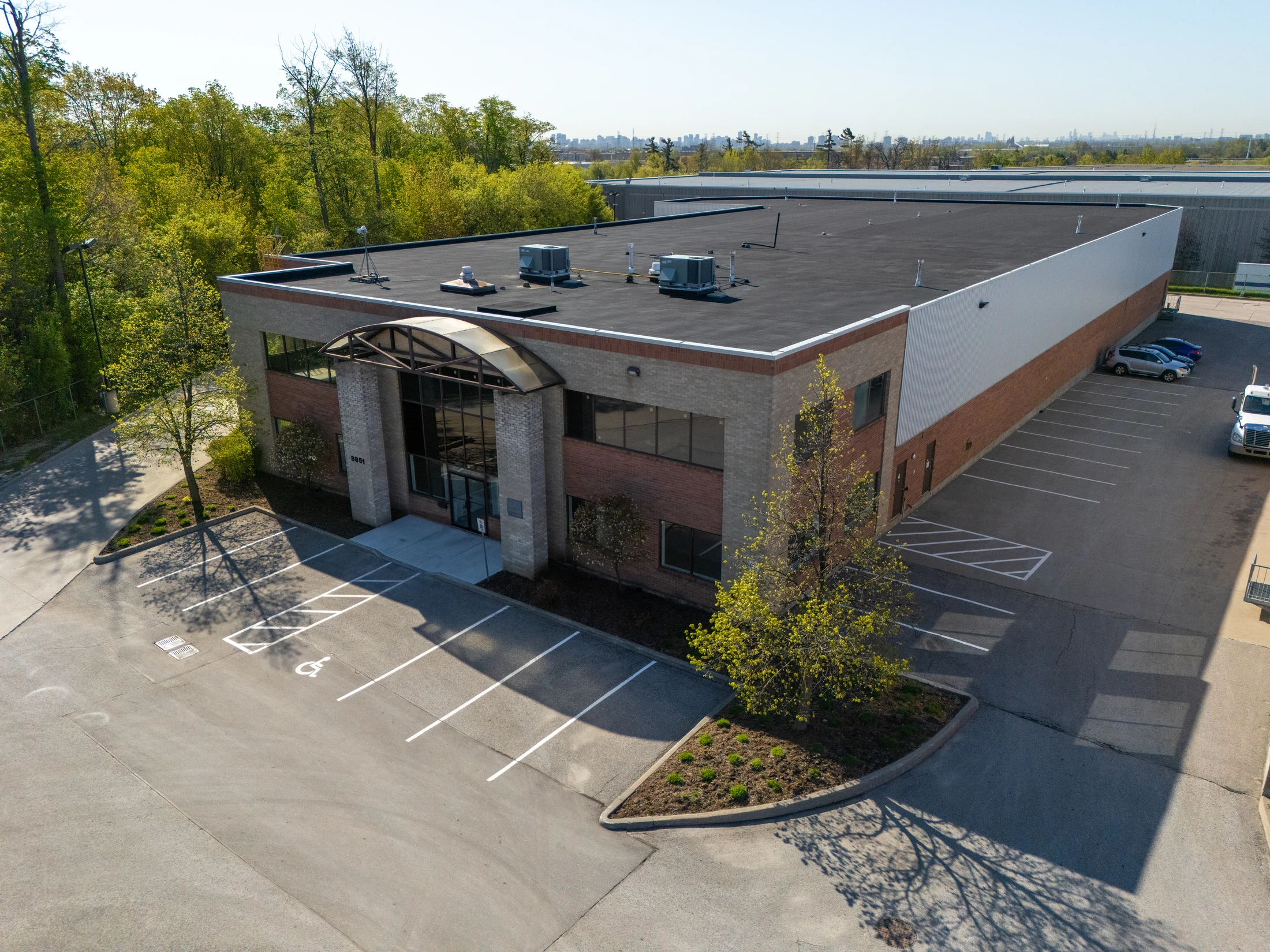
3PL, logistics & distribution hubs
3PL & logistics
Space for an operation that never stands still.
Third party logistics and distribution operations require facilities designed for speed, efficiency, and scalability. We specialize in helping 3PL providers, freight forwarders, and logistics companies secure industrial properties that support warehousing, fulfilment, cross-docking, and transportation intensive operations across the GTA.
We understand how critical building layout, door count, ceiling height, yard configuration, trailer access, and proximity to major transportation corridors are to a logistics business. We evaluate properties through an operational lens, so inbound and outbound flow, staging areas, racking potential, and material handling requirements are fully supported.
With extensive experience working with logistics users across the GTA, we help identify facilities that can accommodate high trailer volumes, flexible storage systems, and future expansion. We also navigate zoning, permitted uses, and landlord negotiations so the space aligns with operational needs from day one.
Facilities we work with
- Warehouses laid out for racking, mezzanine, and bulk storage
- Cross-dock buildings
- Fulfilment and e-commerce facilities
- Freight forwarding and transportation facilities
- Buildings with abundant truck level or drive-in doors
- Large trailer courts for parking 53 ft trailers
- Yards with the turning radii heavy vehicles need
- Multiple dock buildings with staging and sorting space
- Last mile dispatch facilities
- High ceiling buildings with mezzanine potential
Why choose us: our logistics focused advantage
A logistics building is a piece of equipment. Doors, court depth, column spacing, and ceiling height decide how many loads a shift can turn, so those are the numbers we compare.
- Experience placing 3PL and logistics clients in industrial warehouse space optimized for their workflow, including racking, mezzanine, cross-dock, shipping and receiving, staging, and sorting.
- Connections with racking suppliers, warehouse outfitting vendors, freight handling equipment vendors, forklift and material handling providers, office fit-out contractors, dock leveller suppliers, yard paving contractors, and security and surveillance installers.
- Warehouse properties reviewed for abundant truck level or drive-in doors, large trailer courts for parking 53 ft trailers, sufficient turning radii, yard space, multiple docks, mezzanine potential, and ceiling height.
- An understanding of workflow requirements: inbound receiving, storage, sorting and processing, outbound fulfilment, and last mile dispatch, with the flexibility to accommodate both palletized and bulk shipments, staging areas, and the choice between cross-dock and racked storage.
- Knowledge of compliance needs, including fire safety, building code, the occupancy classification for warehousing and industrial use, insurance, liability, and security.
- The ability to negotiate lease terms that allow for variable staffing, scalable operations, short or long term flexibility, expansion, and yard usage.
Common logistics and 3PL requirements
A 3PL brief has to survive the contract you have not won yet. These are the requirements we set down before the search narrows, with a note beside each one about what could change.
- Warehouse layout and workflow: docks, staging, sorting, cross-dock, and racking.
- Truck and trailer access: door count, yard space, turning radius, and trailer parking.
- Racking and storage infrastructure: pallet racking, shelving, mezzanine, and bulk storage.
- Material handling and equipment: forklifts, pallet jacks, dock levellers, conveyors, and readiness for automation.
- Scalability and flexibility: the ability to expand storage, adjust the layout, and negotiate flexible lease terms.
- Location and transportation access: proximity to highways, major roads, intermodal service, and last mile delivery corridors.
- Security, insurance, and compliance: fire code, sprinkler design, security, and zoning.
Where we search
We work with logistics operators across Toronto, Vaughan, Brampton, Markham, Mississauga, Oakville, Burlington, Milton, Hamilton, Newmarket, Aurora, Bradford, Etobicoke, North York, Scarborough, Barrie, and the surrounding industrial markets. For a transportation intensive operation the highway network and the driver catchment usually set the boundary.
How the search is organized
Third-party logistics businesses need to accommodate changing contracts and volumes. We help compare building configurations, access, and commercial terms against your current requirements and plausible growth scenarios.
Design around changing contracts
A third-party logistics brief should describe the types of goods, handling methods, order profiles, and expected peaks. Identify which requirements are stable and which could change with a customer contract. This helps distinguish useful flexibility from space that is simply unused.
Test the busiest dispatch period
Consider simultaneous receiving, picking, packing, and outbound loading. Trailer movements and staging requirements should be reviewed as part of one system. The shortlist should make clear where each option accommodates that peak and where it introduces a compromise.
Turn the requirements into a coordinated search.
Joe connects your operational brief with the property search, tours, and commercial discussions. Use the guided property brief to record what you know before a first conversation, and read Joe’s writing on the insights for the questions worth putting to your technical team.
Questions we hear
Before you
start looking.
How much trailer court do we actually need?+
More than the drawing usually suggests. A 53 ft trailer needs room to swing as well as room to sit, so the court depth, the turning radius, and the number of parked trailers have to be considered together. We measure the court against your busiest dispatch period rather than a typical day, because that is when a shallow court starts costing you loads.
Cross-dock or racked storage?+
It depends on dwell time. Freight that moves the same day rewards door count, staging depth, and a building configured to flow straight through. Inventory that sits rewards clear height and racking. Many 3PL operations need both in one building, which makes door count on one side and rackable depth on the other the two numbers that decide the shortlist.
Our contracts change. How do we avoid signing for the wrong building?+
By separating what is stable from what is contract dependent. Door count, court depth, clear height, and location are hard to change later, so they are specified for the plausible upside. Racking layout, mezzanine, and staffing are flexible, so they are specified for today. Lease flexibility, expansion rights, and term length are then negotiated around that split.
Can you help with racking, dock levellers, and yard work?+
Yes. We work with racking suppliers, warehouse outfitting and freight handling vendors, forklift and material handling providers, dock leveller suppliers, yard paving contractors, office fit-out contractors, and security installers, and we introduce them while the deal is still being negotiated so the cost and the schedule are known.
From Insights
Joe’s writing on 3PL & logistics
Your next move
Let’s talk
about what’s next.
A new facility. A better lease. A different direction.
Start with a conversation about your business.