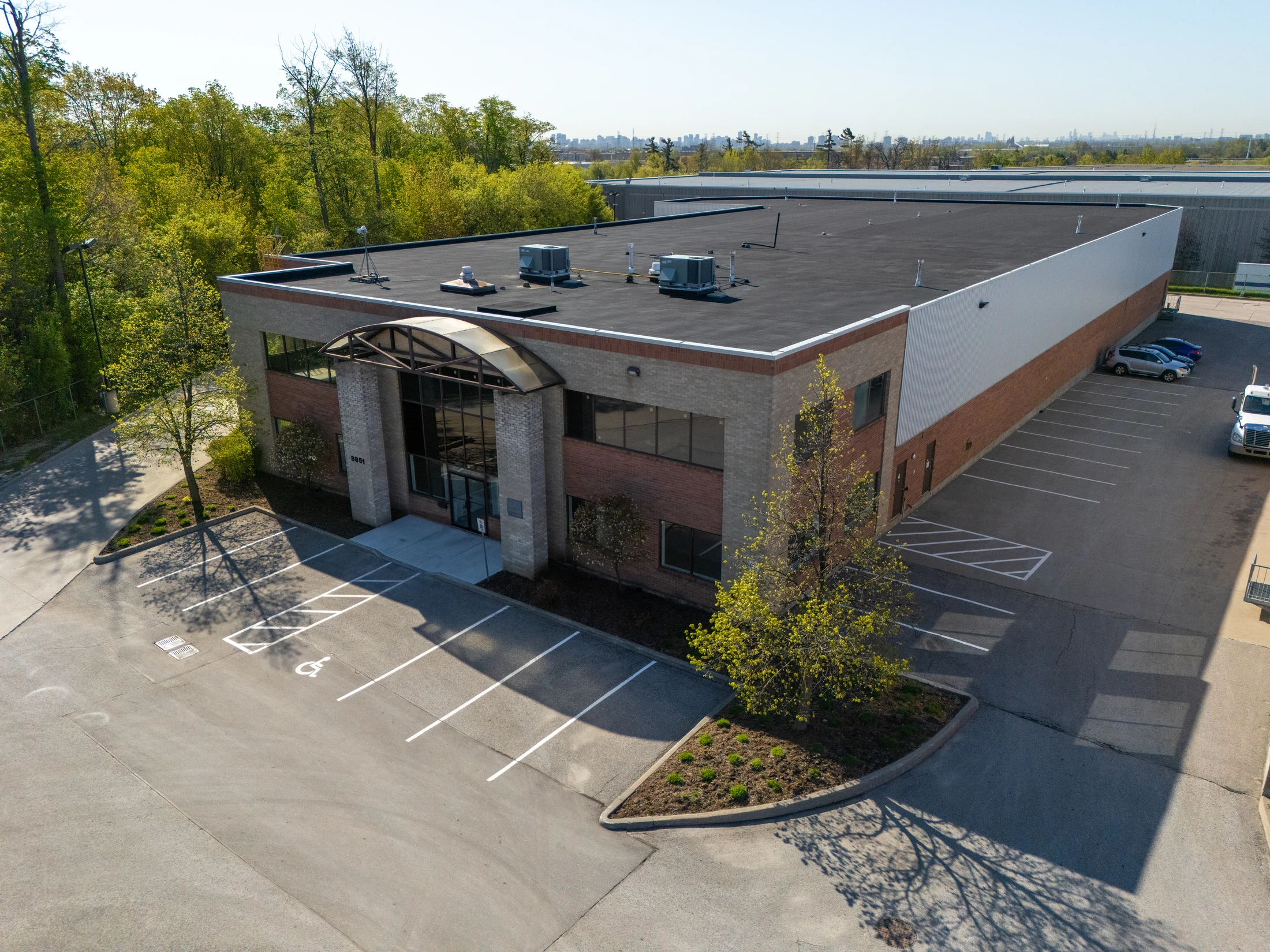
Automotive & auto industry properties
Automotive properties
The right setting for automotive operations.
Automotive operations require facilities that can support vehicle access, specialized infrastructure, and strict regulatory compliance. We specialize in helping automotive businesses secure industrial properties that suit service and repair operations, parts distribution, fleet storage, and automotive related manufacturing or assembly.
We understand the importance of building configuration, drive-in and overhead doors, floor load capacity, ventilation and exhaust systems, hazardous material handling, and adequate parking or yard space. We evaluate properties through an operational lens, so the facility can accommodate service bays, equipment, inventory storage, and efficient vehicle movement.
With experience working with automotive users across the GTA, we help clients navigate zoning requirements, environmental considerations, and landlord negotiations so permitted use, required improvements, and long term flexibility are properly addressed. The focus is on securing a facility that supports efficient operations today while leaving room for future growth.
Facilities we work with
- Service and repair facilities with vehicle bays
- Parts distribution warehouses
- Fleet storage yards and parking
- Automotive manufacturing and assembly plants
- Aftermarket and accessory operations
- Garages and industrial bays with drive-in doors
- Buildings with strong flooring for vehicle weight
- Facilities with exhaust ventilation and vehicle lifts or hoists
- Secure parts, tire, and fluid storage
- Separate shipping, receiving, and storage zones
- Office space for administration and sales
- Yards and customer parking
Why choose us: our automotive specialized advantage
Automotive is one of the uses a municipality looks at closely, so the zoning and the environmental questions come first and the building comes second.
- Expertise navigating the zoning, environmental, and building code issues around automotive uses, including repair and service, parts storage, manufacturing, aftermarket, and fleet operations.
- A network of contractors and vendors for the fit-out an automotive user needs: service bays, vehicle lifts and hoists, exhaust ventilation, waste oil and solvent disposal, floor reinforcement, specialized lighting, fire suppression, hazardous materials compliance, storage racks, and security.
- Buildings assessed for automotive suitability: garages, industrial bays with drive-in doors, yards or parking for a fleet, adequate ceiling height, strong flooring for vehicle weight, separate shipping, receiving, and storage zones, and office space for administration and sales.
- An understanding of the operating flow, from receiving auto parts through storage, inventory management, and distribution, to service bays, parts pick-up and drop-off, and fleet dispatch and staging.
- Negotiation with landlords for tenant improvements, including build-outs, ventilation and exhaust systems, waste oil handling, parking and yard usage, signage, and customer parking.
Common automotive requirements
The word automotive covers everything from a parts warehouse to an assembly plant. Setting these requirements out precisely is what keeps the search on the buildings that can actually take your use.
- Zoning, environmental, and regulatory compliance for the specific use, whether that is service, repair, manufacturing, or parts distribution.
- Building structure and fit-out: floor loading, service bays, drive-in or overhead doors, ventilation and exhaust systems, vehicle lifts, lighting, fire suppression, and hazardous materials handling.
- Storage and inventory for parts, tires, and fluids, including warehouse shelving and racking, bulk storage, and secure parts storage.
- Vehicle access, parking, and fleet storage: customer parking, fleet parking, loading and unloading, yard or lot, and turning radius.
- Workflow and operations: receiving parts, storage, distribution, vehicle servicing, assembly or maintenance, and client pick-up and drop-off.
- Flexibility and expansion: room for more bay or service space, storage growth, and a change of use over time.
Where we search
We work with automotive businesses across Toronto, Vaughan, Brampton, Markham, Mississauga, Oakville, Burlington, Milton, Hamilton, Newmarket, Aurora, Bradford, Etobicoke, North York, Scarborough, Barrie, and the surrounding industrial markets. Because the permitted use varies between municipalities, the zoning check often shapes the search area as much as geography does.
How the search is organized
Automotive businesses have varied needs, from parts distribution to manufacturing and service operations. A precise description of the intended activity helps focus the property search and subsequent professional review.
Define the actual automotive activity
Parts storage, assembly, repair, and vehicle handling require different property questions. Describe the process and the types of vehicles or equipment involved. Avoid relying on the broad label of automotive when discussing a site’s suitability.
Review access and equipment together
Vehicle circulation, loading, work areas, and storage need to fit the operation as a whole. Identify the proposed equipment and alterations early so the relevant specialists can assess them. Keep the commercial search connected to that technical brief.
Turn the requirements into a coordinated search.
Joe connects your operational brief with the property search, tours, and commercial discussions. Use the guided property brief to record what you know before a first conversation, and read Joe’s writing on the insights for the questions worth putting to your technical team.
Questions we hear
Before you
start looking.
Is our use permitted at this address?+
That is the first question on every automotive search, and it is answered property by property. Repair and service, parts storage, manufacturing, aftermarket work, and fleet parking are treated differently under municipal zoning, and some are permitted only in particular industrial zones. We check the zoning and the permitted use with the municipality while the shortlist is still open, and your planner or counsel confirms it before a commitment.
Can we add hoists, exhaust ventilation, and a waste oil system?+
Usually, with the right landlord and the right building. Floor reinforcement for hoists, exhaust ventilation, waste oil and solvent handling, specialized lighting, and fire suppression are all tenant improvements that can be negotiated. We put them into the commercial discussion early and introduce the contractors who install them so the cost and the schedule are understood before the lease is signed.
What does an automotive building need structurally?+
Flooring strong enough for vehicle weight and for hoist anchors, adequate ceiling height for the lift and the vehicle above it, drive-in or overhead doors sized for what has to come inside, and ventilation suited to the work being done. Beyond the building, yard or parking for fleet and customer vehicles and a turning radius that suits deliveries.
We run a fleet. What should we look for?+
Yard or lot area sized for the vehicles parked overnight, a turning radius that works for the largest of them, secure fencing, and ingress and egress that does not force vehicles to back onto a public road. Dispatch and staging space matters as much as the building, and yard use has to be written into the lease rather than assumed.
From Insights
Joe’s writing on automotive properties
Your next move
Let’s talk
about what’s next.
A new facility. A better lease. A different direction.
Start with a conversation about your business.