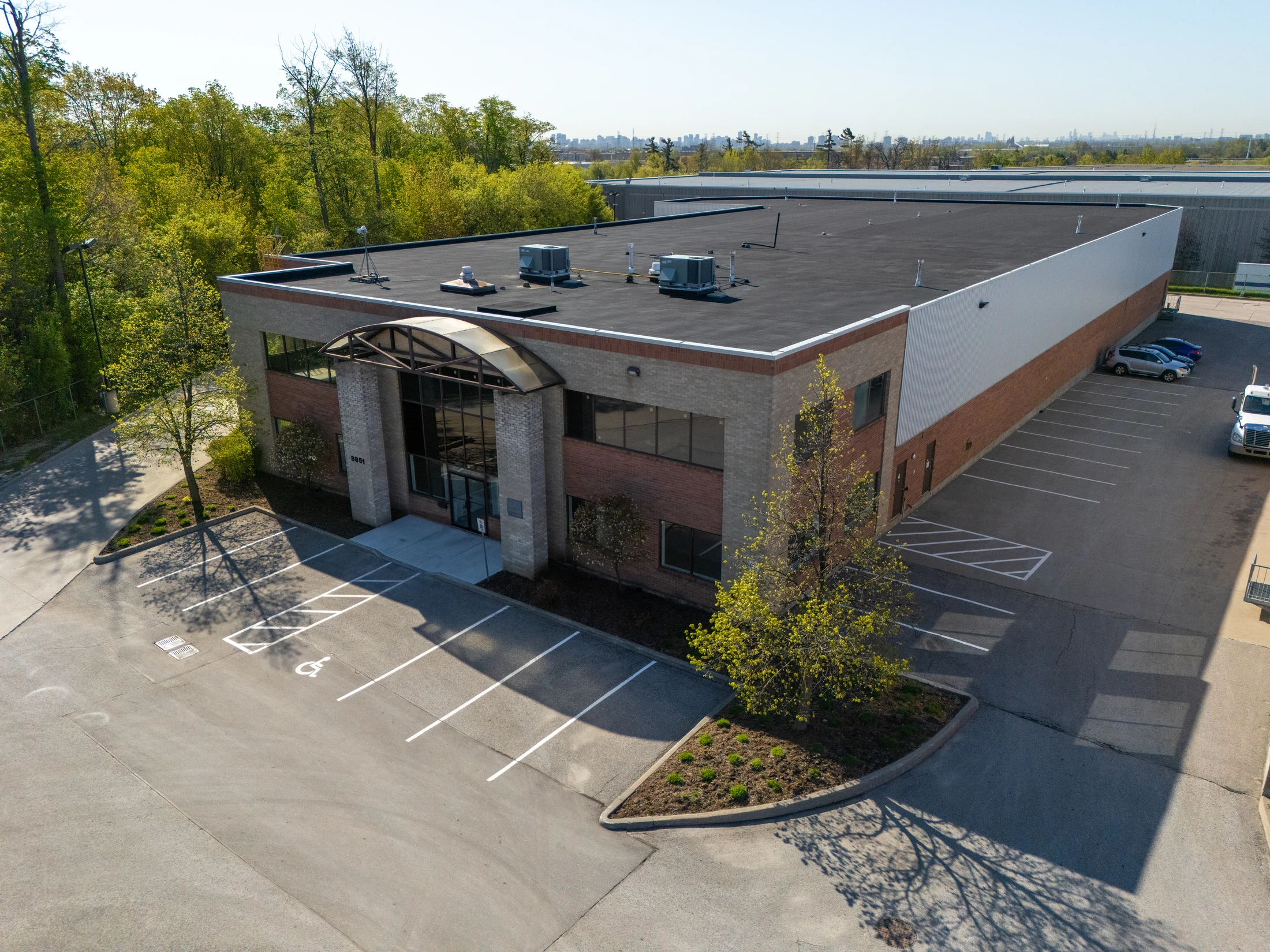
Food distribution & production
Food facilities
Specialized operations need a specialized search.
Ontario is home to a large number of food based importers, distributors, and production companies, all of whom benefit from a large and growing diverse customer base in the province and the substantial supply chain and retail infrastructure that is in place.
Helping food based corporations such as importers, distributors, and producers with their real estate needs is one of our core specialties. Every search starts with the process rather than the square footage: what is stored, what is produced, what has to stay cold, and how product moves from the receiving door to the outbound truck.
Facilities we work with
- Refrigerated and freezer facilities
- Food processing plants
- Food distribution centres
- CFIA, SFCA, and HACCP certified facilities
- Dry mix and blending plants
- Dairy and beverage plants
- Organic, kosher, and fresh produce facilities
- Meat and poultry plants
- Commercial bakeries
Our advantage for food businesses
Food occupiers are asked questions that other industrial tenants never face. Knowing those questions in advance is most of the work.
- We know your business. We have worked with food occupiers on real estate transactions, we know what matters to a food based business when it comes to its property needs, and we know how to work with landlords to make things happen.
- We have the contacts. Whether you need support with cooler and freezer vendors, racking suppliers, pest control companies, general contractors, zoning changes, and more, we have a network of trusted professionals we have worked with on many projects who can help with whatever you need.
- We have the properties. Anyone can send you properties from the MLS. We will do that, and we also maintain a broad network of food friendly landlords and brokers who understand what a food occupier needs from a building.
Cooler and freezer requirements
Many food users require substantial walk-in cooler and freezer space, and we help navigate this requirement with our clients and with landlords to make sure everyone is happy. Not all landlords are initially open to such a requirement, but we can work with them to gain acceptance and often to obtain concessions such as free rent and a tenant improvement allowance to offset costs.
Pest control
We understand that for food users, having an immaculate facility is of critical importance. That means pest control is a massive priority, and we have a network of vendors who can manage this issue for you so that your facility remains completely pest free. We also prioritize properties for you that are of the highest quality construction and cleanliness standards, so that you can be comfortable about running a clean operation.
Shipping capability
We understand how important shipping and logistics is to food based companies, so it is critical that we uncover property options that can support efficient and functional shipping and receiving activities. That means an abundant number of truck level doors with enough space for 53 ft trailers to manoeuvre easily in the rear shipping court. In some cases it also means oversized drive-in doors, so a flatbed truck can enter and leave the facility as needed for easy unloading.
Location
This can be a critical factor for a food based business. Being close to a reliable labour force, or relocating close to an existing facility in order to retain staff, can be paramount. Likewise, access to the major 400 series highways and the transportation networks across the GTA, in order to reach key customers and markets, is absolutely essential for many food companies. Location has a bearing on rent rates and availability as well, so those factors have to be balanced against the operating requirements.
Entry into Canada
In our food specialization, many of our clients are businesses that originate outside of Canada and want to expand into the Canadian market. Our services not only represent those clients for their property needs, we also work with a group of professionals, from immigration professionals to marketing agencies, who assist overseas businesses with a smooth entry into the Canadian market. We will connect you with the professionals who have been instrumental in assisting our clients in the past with a smooth transition.
How we advocate for you
Some landlords, even some of the largest ones, may not be fully comfortable with having food based businesses as tenants, because of concerns around odours, pests, or perishable ingredients. We are experts at challenging that narrative and educating those landlords as to why a food based business is a phenomenal tenant.
Many landlords do not realize how recession proof most food based businesses are, since during a weaker economy many consumers revert to making more food at home rather than dining out. That is just one example of the insight we bring to a landlord in order to get them on board with your business. We have even had success in obtaining concessions for our food clients, such as lengthy fixturing or free rent periods to give them time to build out the space and install cooler and freezer equipment, and in some cases tenant improvement allowances to contribute to those costs.
Where we search
We work with food businesses across Toronto, Vaughan, Brampton, Markham, Mississauga, Oakville, Burlington, Milton, Hamilton, Newmarket, Aurora, Bradford, Etobicoke, North York, Scarborough, Barrie, and the surrounding industrial markets. For a food occupier the boundary is usually set by labour, by the highway network, and by how far the product can travel.
How the search is organized
Food processing and distribution require a detailed property brief. We coordinate the search around your operational needs and the information your technical advisers need to assess a facility.
Describe the process, not just the sector
Food storage, distribution, and processing place different demands on a facility. Explain temperature requirements, product movement, separation of activities, and cleaning needs in the brief. Your technical team should identify which requirements determine whether a property is worth closer review.
Separate existing systems from proposed work
Record which systems are already present and which would need to be installed or adapted. A photograph or previous use does not establish suitability for your operation. Coordinate detailed investigation with the professionals responsible for the process and facility.
Turn the requirements into a coordinated search.
Joe connects your operational brief with the property search, tours, and commercial discussions. Use the guided property brief to record what you know before a first conversation, and read Joe’s writing on the insights for the questions worth putting to your technical team.
Questions we hear
Before you
start looking.
Will a landlord lease to a food business?+
Many will, and the ones who hesitate usually do so because of concerns around odours, pests, or perishable ingredients rather than anything specific to your operation. We put the case to them directly, including how stable food businesses are as tenants through a weaker economy. In several cases that conversation has produced concessions rather than a refusal, including fixturing periods, free rent, and tenant improvement allowances.
Can we install walk-in coolers and freezers in a leased building?+
Frequently, yes. Walk-in cooler and freezer space is one of the most common requirements we handle, and it is a negotiation as much as a construction question. We raise it with the landlord early, work through the concerns, and aim for terms that recognize the cost, such as a fixturing period, free rent, or a tenant improvement allowance toward the equipment.
How much shipping capacity does a food facility need?+
Enough truck level doors for the volume, and a rear shipping court with room for a 53 ft trailer to manoeuvre comfortably rather than just fit. Where product arrives on flatbeds, oversized drive-in doors that let a truck enter the building make unloading far simpler. We measure the court and the door count against your real shipping pattern, not the listing description.
How do you deal with pest control?+
It is treated as a priority from the first shortlist. We favour properties built and maintained to a high standard of construction and cleanliness, and we can introduce pest control vendors who take the issue on for you so the facility stays clean.
What kinds of food facilities do you work with?+
Refrigerated and freezer facilities, food processing plants, food distribution centres, CFIA, SFCA, and HACCP certified facilities, dry mix and blending plants, dairy and beverage plants, organic, kosher, and fresh produce facilities, meat and poultry plants, and commercial bakeries.
From Insights
Joe’s writing on food facilities
Perspectives
A Regulatory Overview for Canadian Food Warehouses and Production Facilities
As my business has focused more and more on food-based warehouses, distribution centres, and production facilities, I have been increasingly exposed to the regulatory and licensing…
Perspectives
Ingredients for Success: Critical Qualities for a Food Grade Warehouse or Distribution Center
In the dynamic world of food distribution, the significance of a well-equipped and efficiently managed food grade warehouse cannot be overst
Your next move
Let’s talk
about what’s next.
A new facility. A better lease. A different direction.
Start with a conversation about your business.