Local perspective
Vaughan industrial real estate
Industrial opportunities across Concord and the wider Vaughan market.
Concord & the northern GTA
Understand the area before choosing the address.
Vaughan sits directly above Toronto and is bounded by several 400 series highways, including Highway 400, Highway 427 and Highway 407. It is also the only municipality outside Toronto with its own TTC subway service, at the Vaughan Metropolitan Centre. For an industrial occupier that combination means a highway choice in every direction and a labour pool that can reach the city both by car and by transit.
Vaughan’s industrial market is well established and consistently sought after, not only for the transportation network and the proximity to Toronto, but because the surrounding population provides both a customer base and a deep labour pool. Concord is the historic core of that market, and the newer employment lands run north and west from it along Highway 400 and toward Highway 427.
For occupiers the practical question in Vaughan is rarely whether the highways work. It is whether the yard does. Much of the older Concord stock was built for smaller vehicles on shared sites, so trailer queuing, shared circulation and the street approach deserve as much attention as the warehouse itself.
Industrial areas in Vaughan
Concord
The area around Keele Street, Highway 7 and Highway 407 is Vaughan’s original industrial district and still its largest. It ranges from 1970s and 1980s multi-unit blocks to renovated freestanding buildings such as the Tudor Business Park property on Keele Street that Joe leased for a landlord client, and it is where small and mid-size occupiers usually start. CN’s MacMillan Yard, one of Canada’s largest rail classification yards, sits within the same district.
Woodbridge
West of Highway 400, Woodbridge runs along Highway 27, Martin Grove Road and Highway 7 toward the Toronto boundary. It has a strong base of food production and distribution, building products, millwork and contractors’ operations, many of them owner-occupied, and it connects quickly to Etobicoke and the airport.
The Highway 400 corridor
North of Highway 7, the employment lands either side of Highway 400 at Langstaff Road, Rutherford Road and Major Mackenzie Drive hold most of Vaughan’s larger and newer distribution buildings. This is where a user needing higher clear height, a deeper shipping court and real trailer parking is most likely to find it.
The Vaughan Enterprise Zone and the northwest lands
Vaughan’s northwest employment lands, served by the Highway 427 extension and Highway 50, are the city’s main area of newer industrial development. Building formats here are closer to Brampton and Milton than to Concord, and servicing and phasing should be confirmed for any site still being brought forward.
Getting goods in and out
- Highway 400 runs north to south through the city, with Highway 407 crossing it at the southern end and Highway 7 as the main arterial.
- The Highway 427 extension and Highway 50 serve the northwest employment lands and connect to Brampton.
- CN’s MacMillan Yard in Concord is the region’s largest rail yard and handles intermodal traffic.
- Toronto Pearson International Airport is reached down Highway 427, or via Highway 400 to the 401 and Highway 409.
- TTC Line 1 terminates at the Vaughan Metropolitan Centre, and VIVA rapid bus routes run along Highway 7 and Jane Street.
- GO Transit’s Barrie line stops at Rutherford and Maple for staff travelling from the north or from Toronto.
Building stock and the businesses here
Vaughan offers the widest range of building formats of any market in York Region. Concord and Woodbridge are dominated by 1970s to 1990s multi-unit and freestanding buildings, often with drive-in loading, modest clear heights and shared truck courts, and they suit contractors, food producers, furniture and millwork businesses, printers and small manufacturers. The Highway 400 corridor and the northwest lands hold the newer large-bay distribution product with higher clear heights, dock loading and trailer parking, which is where logistics and third-party operators concentrate.
What occupiers weigh in Vaughan
- Yard and circulation before floor area. On shared Concord sites the space outside the door often decides whether the operation works, so review the site plan and the neighbours’ shipping pattern alongside the floor plan.
- Outside storage is a zoning question, not a site question. Confirm what the zoning permits before assuming a yard can be used for trailers, containers or materials.
- Highway 7 and Keele Street carry heavy peak traffic. A short distance to the 400 on a map can be a long trip at shift change.
- Labour comes from both York Region and north Toronto, and subway access at the Vaughan Metropolitan Centre can matter for office and administrative staff.
- Newer northwest sites may still be in development. Tie the possession date to servicing, occupancy permits and equipment installation rather than to a marketing date.
Framing a Vaughan search
Vaughan’s municipal planning material identifies employment areas along Highways 400 and 407. Concord is an important starting point for an industrial search within the city.
Local reference: Municipal business and employment-area information.
A Vaughan requirement often begins with a broad request for highway access. Make it more precise: which direction do your trucks travel, how frequently do they return, and which customers require fixed appointment windows? Assess the actual street approach and truck court together. Access to a highway corridor is useful only when the last part of the journey works.
Compare the yard as carefully as the warehouse
For a Concord or wider Vaughan shortlist, ask for a site plan alongside the floor plan. Understand the circulation space shared with neighbouring occupants, where trailers wait, and how employee parking interacts with deliveries. A building that fits the racking plan may still need a different shipping schedule.
Questions to bring to a Vaughan location review
- How will trailers queue without interrupting shared circulation?
- Do you need a particular part of Concord or flexibility across Vaughan?
- Will a future increase in deliveries change the loading requirement?
Joe’s writing on Vaughan
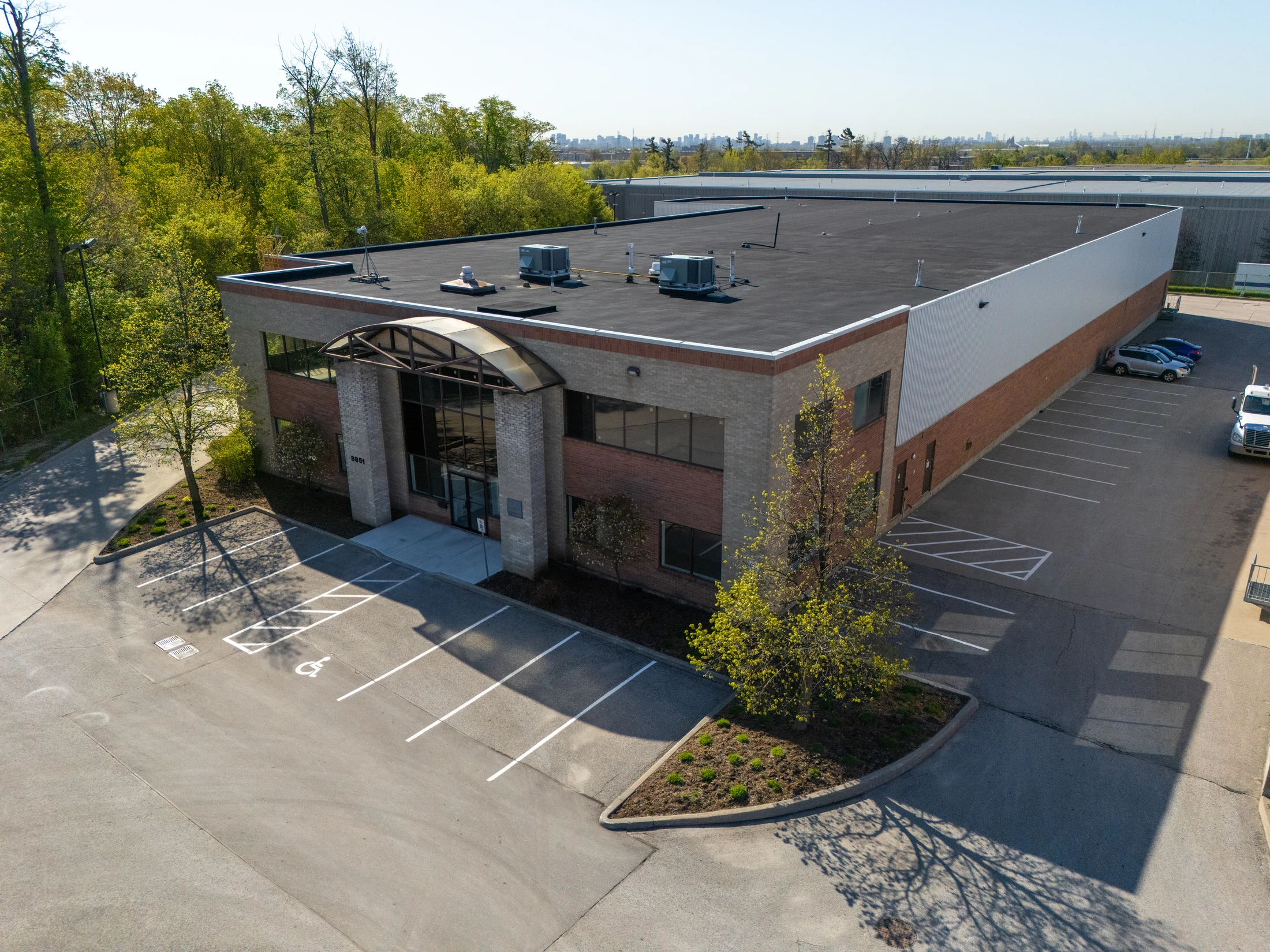
- LEASED - 8851 Keele St, Vaughan
- Industrial Building Warehouse for Lease in Vaughan - Commercial Real Estate
- Case Study: Patience, Preparation, and Calculated Risks for a Vaughan Industrial Property
- Reasons Why You Should Consider Moving to Vaughan for Business
Connect the location decision to the property search.
Once the search area is clear, use a consistent brief to compare individual facilities. Joe can organize the search around leasing, purchasing, or a stay-versus-move decision. That keeps the reason for choosing Vaughan connected to the actual spaces being considered.
For building criteria, search options, and the information to request on a tour, continue to the dedicated Vaughan industrial property search guide.
Comparing locations
A clearer local brief.
Which areas should I compare with Vaughan?+
Consider North York, Brampton, Markham where they fit the same operating requirements. These are geographic search connections, not a claim that the markets have identical buildings, costs, or availability.
Does a location guide confirm a property is suitable for my business?+
No. The guide helps structure a location decision. The actual site, building, intended activity, and proposed changes need their own review.
Where should I start if I am still choosing a location?+
List the daily journeys made by your staff, deliveries, and customers. Add the building essentials and timing in the property brief. Joe can then help identify areas worth comparing.
Your next move
Let’s talk
about what’s next.
A new facility. A better lease. A different direction.
Start with a conversation about your business.